
Hidden History of Wayanad: Edakkal Caves, Forgotten Gold Mines, and India’s First Guerrilla War
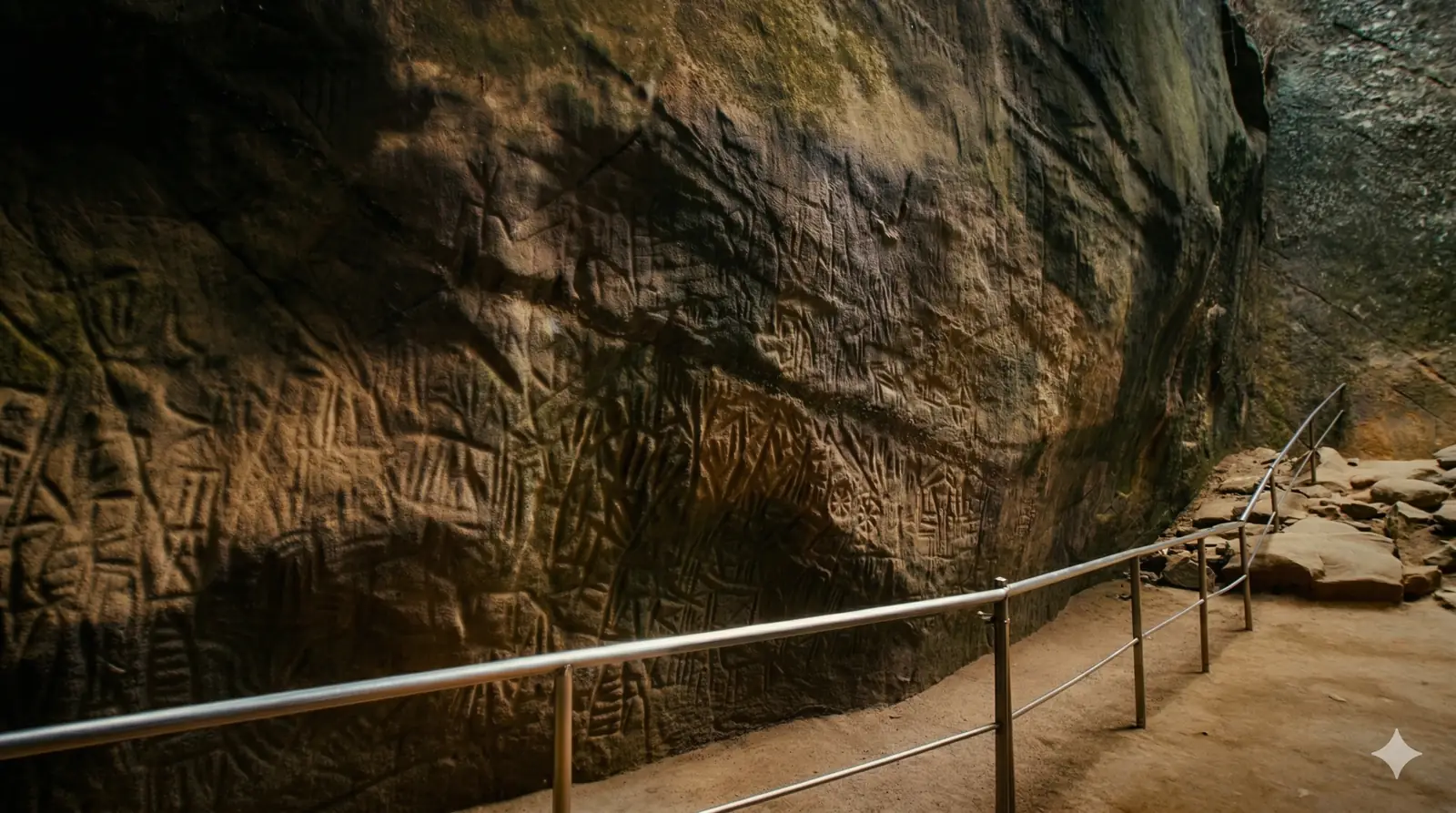
Wayanad has been inhabited for at least 6,000 years, prospected by Victorian engineers, and defended by one of India's most effective anti-colonial warriors. Almost none of this appears on the standard tourist map.
Edakkal Caves: 6,000 Years of Human Presence
The Edakkal Caves near Ambalavayal are not caves in the geological sense — they are rock shelters formed by the natural fissuring of a massive granite outcrop at 1,200 metres above sea level. Inside, carved directly into the rock face (not painted — carved), is a corpus of Neolithic petroglyphs dated to at minimum 4,000–6,000 BCE. Human figures, elephants, peacocks, geometric patterns, and symbol sequences that some researchers tentatively link to Indus Valley-era proto-writing systems — all preserved in a place most tourists spend 40 minutes visiting.
Visit properly: Allow 2.5–3 hours. Hire the official site guide at the entrance — they carry a reference sheet identifying specific carvings and their estimated periods. Bring a powerful torch for the rear section of the lower cave where the densest carvings sit in near-darkness. Weekday morning visits avoid group tour congestion.
💡 Photography: The rear lower cave has the most detailed carvings. Natural light barely reaches them — a torch is essential, not optional.
The Victorian Gold Field: Wayanad's Industrial Ghost Story
British geologists identified a gold-bearing geological belt running through Wayanad in the 1870s. Over the following four decades, a series of mining companies sank shafts, imported steam-powered equipment, recruited thousands of Tamil workers, and extracted substantial quantities of gold-bearing ore. The operations concentrated near Mananthavady, with workings at Edava and several other sites since absorbed into agricultural land.
By the early 20th century, declining ore grades and rising extraction costs made the field unviable. What remains is scattered: a crumbling brick engine house near Mananthavady visible from a coffee plantation road, corroded Victorian ironwork in farm undergrowth, and a genuinely absorbing exhibit at the Wayanad Heritage Museum in Ambalavayal — original survey maps, photographs, and ore samples from the colonial prospecting era.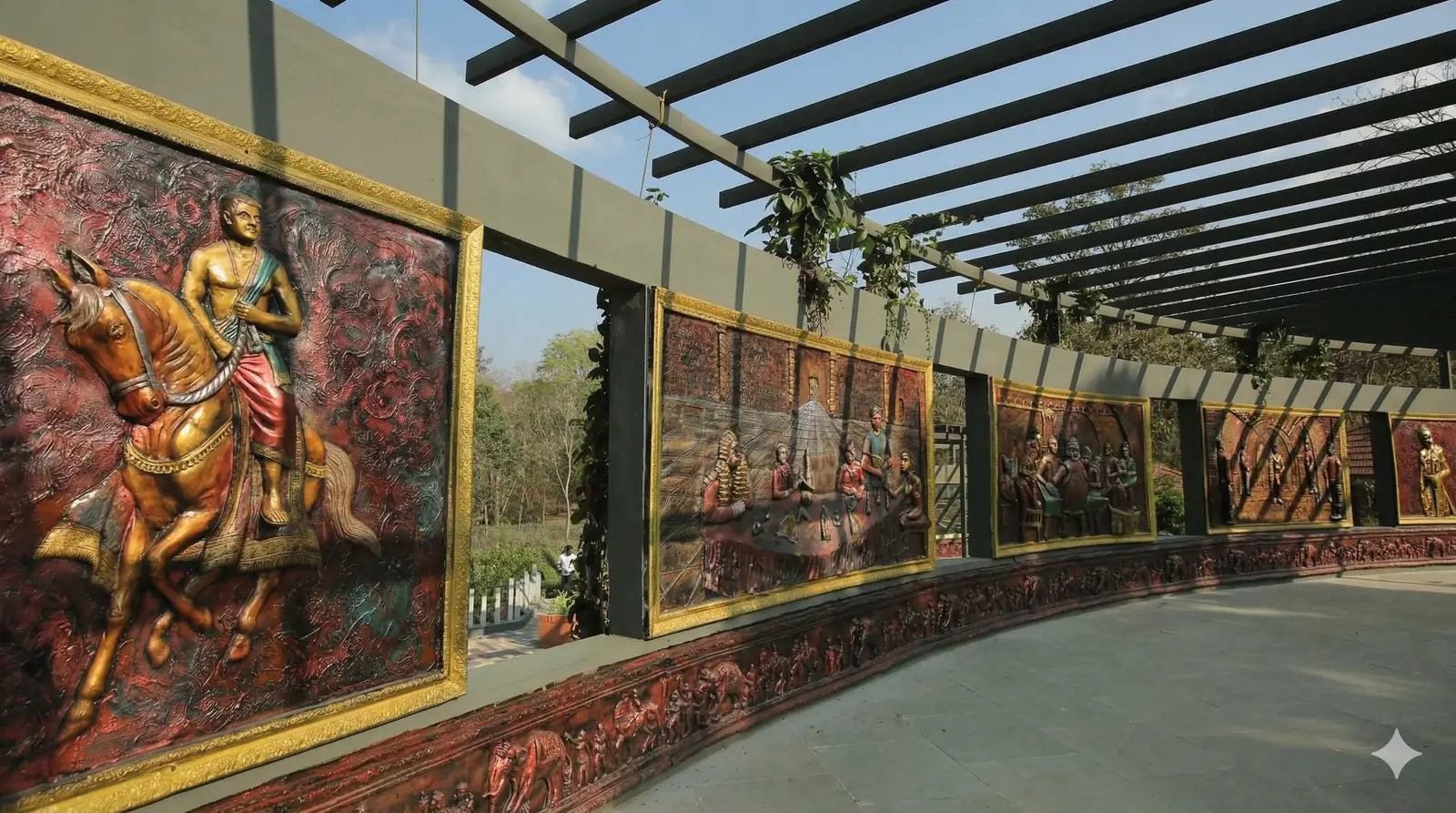
Pazhassi Raja: India's First Anti-Colonial Insurgent
Kerala Varma Pazhassi Raja conducted a sustained guerrilla campaign against the East India Company from 1793 to 1805 — twelve years before the Vellore Mutiny and over half a century before 1857. His strategy was entirely built on Wayanad's forests: ambushing supply columns on ghat roads, fragmenting British formations in dense vegetation, and disappearing into the hills before any counter-attack could be organised. The British deployed their best Malabar administrator (Thomas Baber) against him and still took over a decade to end the resistance.
Pazhassi Raja was killed near Mananthavady in 1805, but his campaign permanently altered British strategic thinking about the highlands and forced meaningful concessions in the region's taxation structure. The Pazhassi Raja Museum in Mananthavady houses his weapons, correspondence, and a detailed timeline of the Cotiote War. Compact, well-curated, and genuinely moving — allow 90 minutes.
Thirunelli Temple: Ancient Sacred Site at the Forest's Edge
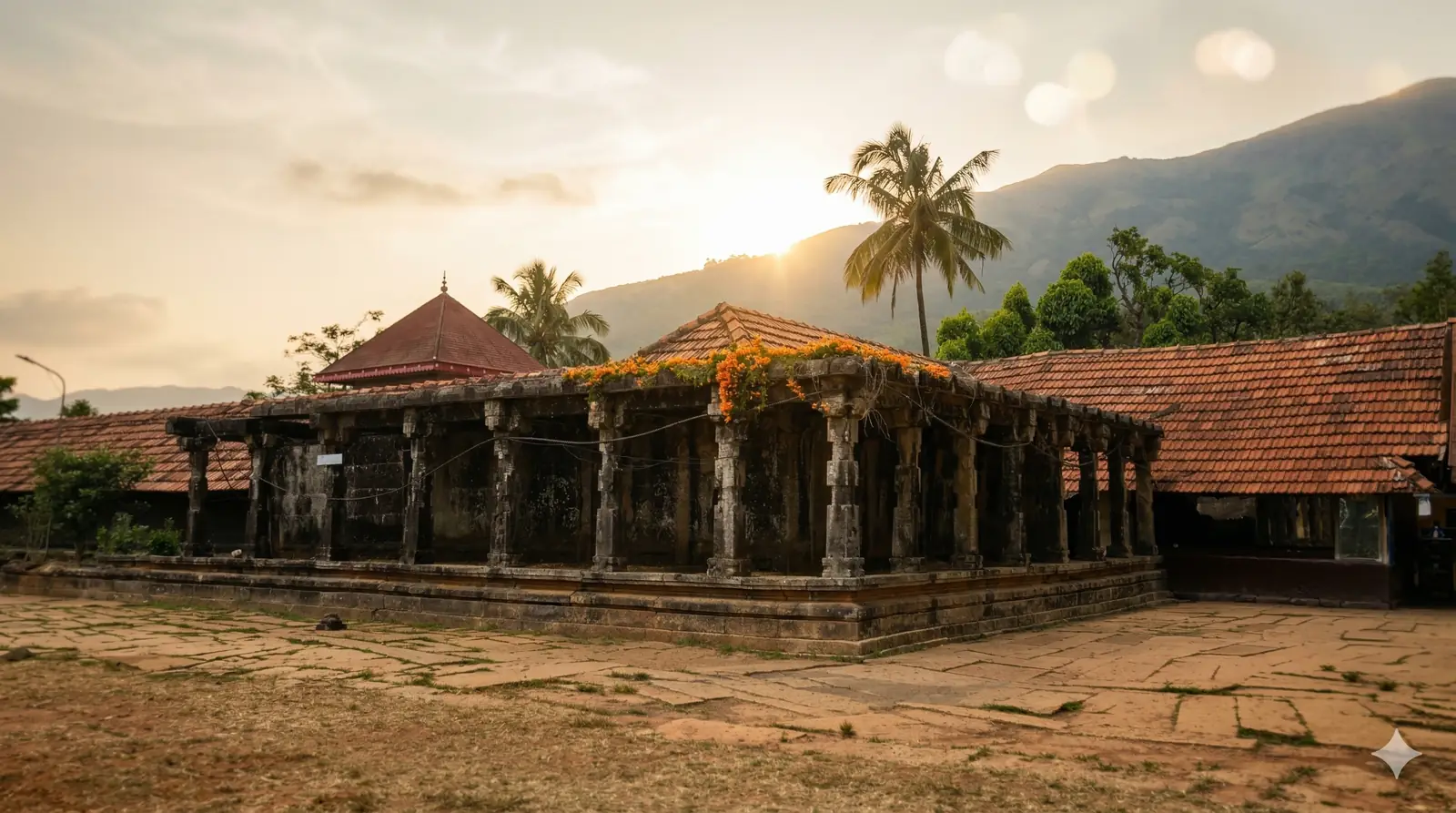
The Thirunelli Maha Vishnu Temple in the Brahmagiri foothills (33 km from Mananthavady) is believed to be over 2,000 years old — its colonnade of 30 monolithic granite pillars, each cut from a single stone, predates the classical Tulu-Brahmin temple architecture of coastal Kerala. The Papanasini stream beside it is considered among Kerala's most sacred waters. The temple sits directly at the Brahmagiri Wildlife Sanctuary boundary — deer are routinely visible from the courtyard at dawn.
The Heritage Day Itinerary
Start at Edakkal Caves by 8 AM (3 hours including the climb). Move to the Wayanad Heritage Museum in Ambalavayal at noon (90 minutes). Afternoon at the Pazhassi Raja Museum in Mananthavady (90 minutes). Drive to Thirunelli Temple for the last light through the forest buffer (2 hours including the 33 km drive). This single day loops through 6,000 years of continuous human history in one landscape — from Neolithic stone-carvers to colonial-era guerrilla warfare.
Base yourself in the cultural heartland. Browse heritage-zone stays near Ambalavayal and Mananthavady at decoupen.com.