
The Wayanad Spice Trail: A Self-Drive Route Through Cardamom, Coffee, and Pepper Country
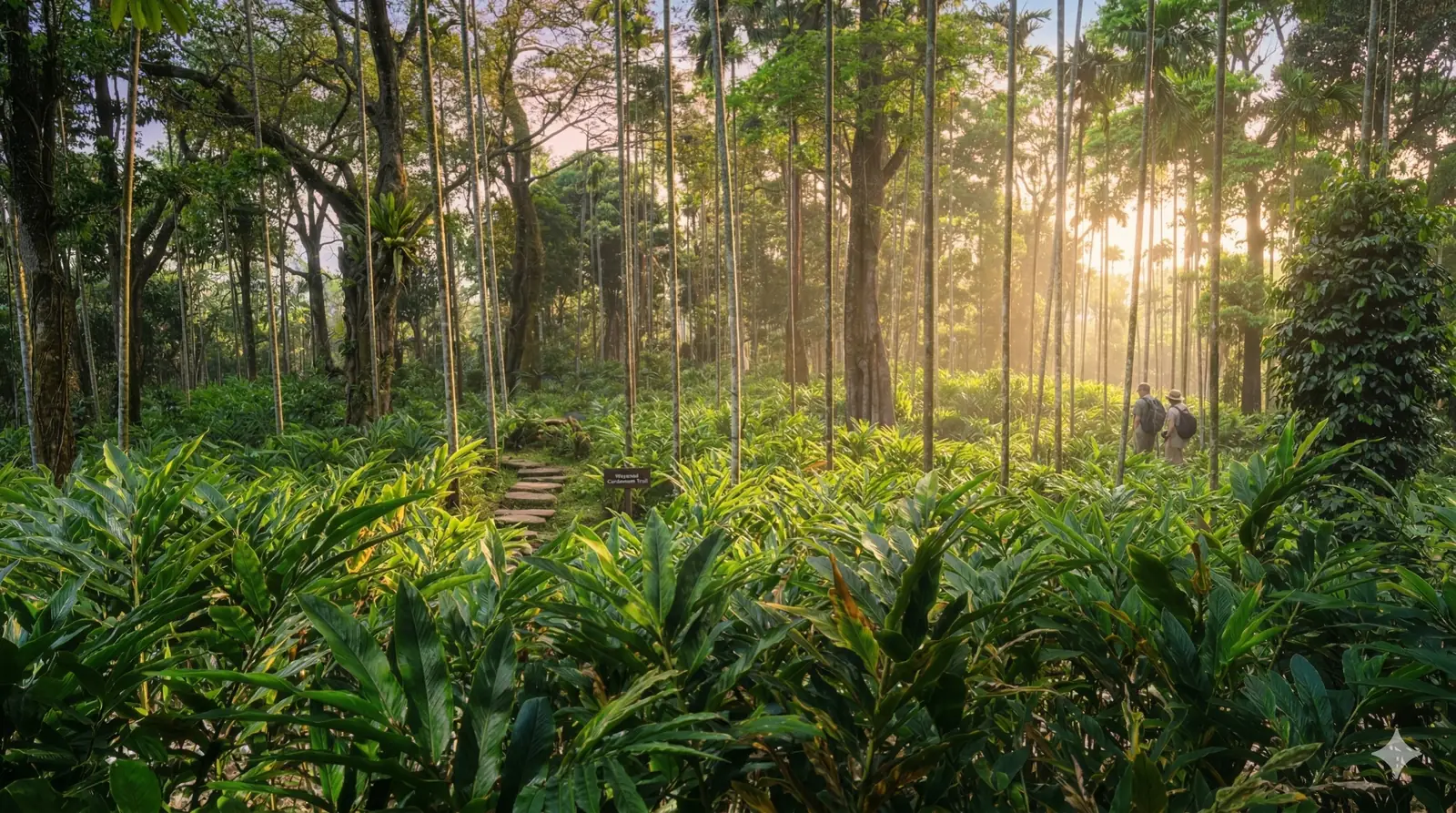
Before Wayanad became a travel destination, it was a trading commodity. Arab merchants and Portuguese traders mapped the Malabar coast specifically for what grows on these hillsides. The cardamom, coffee, and pepper are still here — and you can trace them from root to jar in a single day's drive.
Why Wayanad Spices Are Different
At 700–1,900 metres above sea level with laterite-rich soil and a bimodal monsoon, Wayanad produces spice quality that commercial blenders consistently source for its aromatic concentration. Wayanad green cardamom achieves a volatile oil content noticeably higher than lower-altitude equivalents. Estate Robusta coffee — often dismissed in favour of Arabica — has a body and low acidity at farm level that disappears entirely when blended commercially. These differences are real and perceptible.
The Self-Drive Route: Kalpetta to Sultan Bathery in Six Stops
This route runs roughly east across Wayanad and can be completed in a full day (7 AM–6 PM) or split across two days with a plantation overnight in the middle.
Stop 1 — Kalpetta Wholesale Market (7:00 AM)
The early-morning wholesale spice market near Kalpetta's main road is where farmers sell directly to traders. This is a working commercial space — walk through, observe the raw cardamom pods, pepper clusters, and dried ginger laid on tarpaulins, and note the going price. This is your benchmark. Don't buy here; the value is in calibration.
Stop 2 — Cardamom Estate, Kalpetta–Vythiri Belt (9:00 AM)
Wayanad's cardamom grows under a shade canopy of silver oak — a cultivation system that produces the aromatic concentration the crop is known for. A 45-minute guided walk shows you the manual harvesting process (each green capsule picked individually at peak ripeness) and the solar drying trays. The estate store typically sells sun-dried green cardamom at 35–50% below retail.
💡 Buy: Plump, bright green pods in 100–200g packs. Avoid pale or yellowish pods — signs of over-drying or bleaching.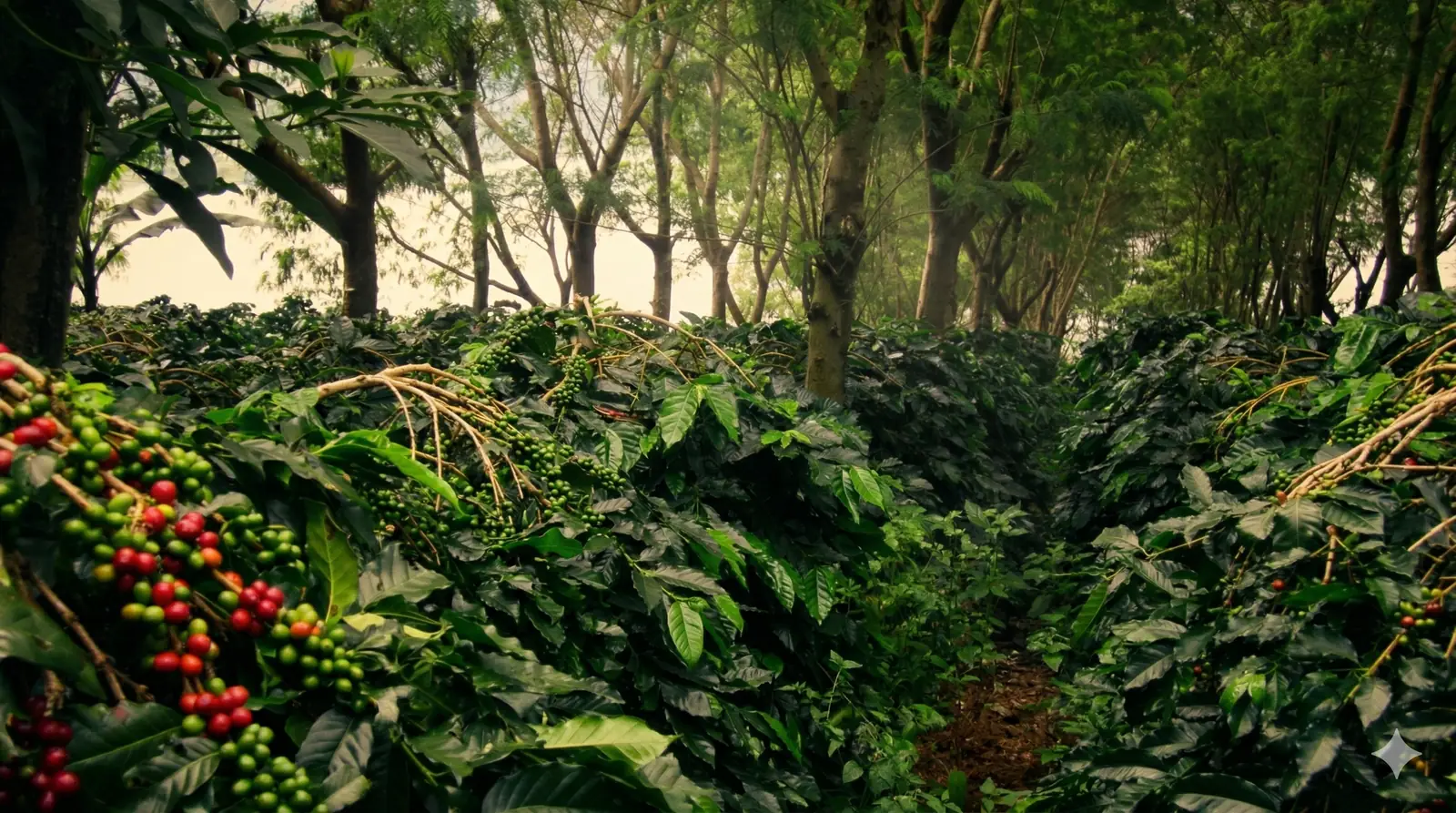
Stop 3 — Coffee Estate Near Meppadi (11:00 AM)
Visit during harvest season (November–February) to see the full wet processing chain: cherry pulping, fermentation tanks, washing channels, and raised drying beds — all within the estate. Several Meppadi-area farms run cupping sessions where you taste different processing methods side by side. Estate-label roasted coffee sold here has never been blended with outside stock.
💡 Buy: Freshly roasted estate coffee (250g, ₹200–350) — ask for the estate's own label, not a packaged gift set.
Stop 4 — The Pepper Vine Road, Vythiri (1:30 PM — Lunch)
The Vythiri–Lakkidi road is lined on both sides with pepper vines climbing silver oak host trees — one of Wayanad's most photogenic agricultural stretches, especially August–October when berries are ripening. Stop for a rice meals lunch at a roadside family restaurant. The food uses fresh local pepper in quantities that make the city equivalent taste thin.
Stop 5 — Vanilla & Nutmeg Estate, Ambalavayal (3:30 PM)
Vanilla requires manual pollination of each individual flower during a six-hour window — one of the most labour-intensive crops in existence. Ambalavayal-area growers who welcome visitors can show you this process firsthand. Whole dried nutmeg and mace (the outer covering) are also available at farm prices significantly below retail.
Stop 6 — Girijan Cooperative, Sultan Bathery (5:00 PM)
End at the tribal cooperative outlet near Sultan Bathery, where the selection crosses into territory no plantation store reaches. Kattunayakan forest honey (harvested from cliff-face hives), wild turmeric, dried black ginger, and medicinal herb preparations — all directly traceable to the collecting community, all unavailable outside Wayanad's tribal stores.
Buy This. Avoid That.
Buy: Sun-dried green cardamom, estate-roasted coffee, heavy dark pepper, forest honey, whole nutmeg. Avoid: Any 'Wayanad Spices' gift box from a highway souvenir shop — these are almost universally blended with lower-grade material from outside the district. Always ask where the spice was grown before purchasing.
Overnight on a working estate and start your trail from your own veranda. Browse plantation stays at decoupen.com.