
Stargazing in Wayanad and the Best Digital Detox Stays in 2025
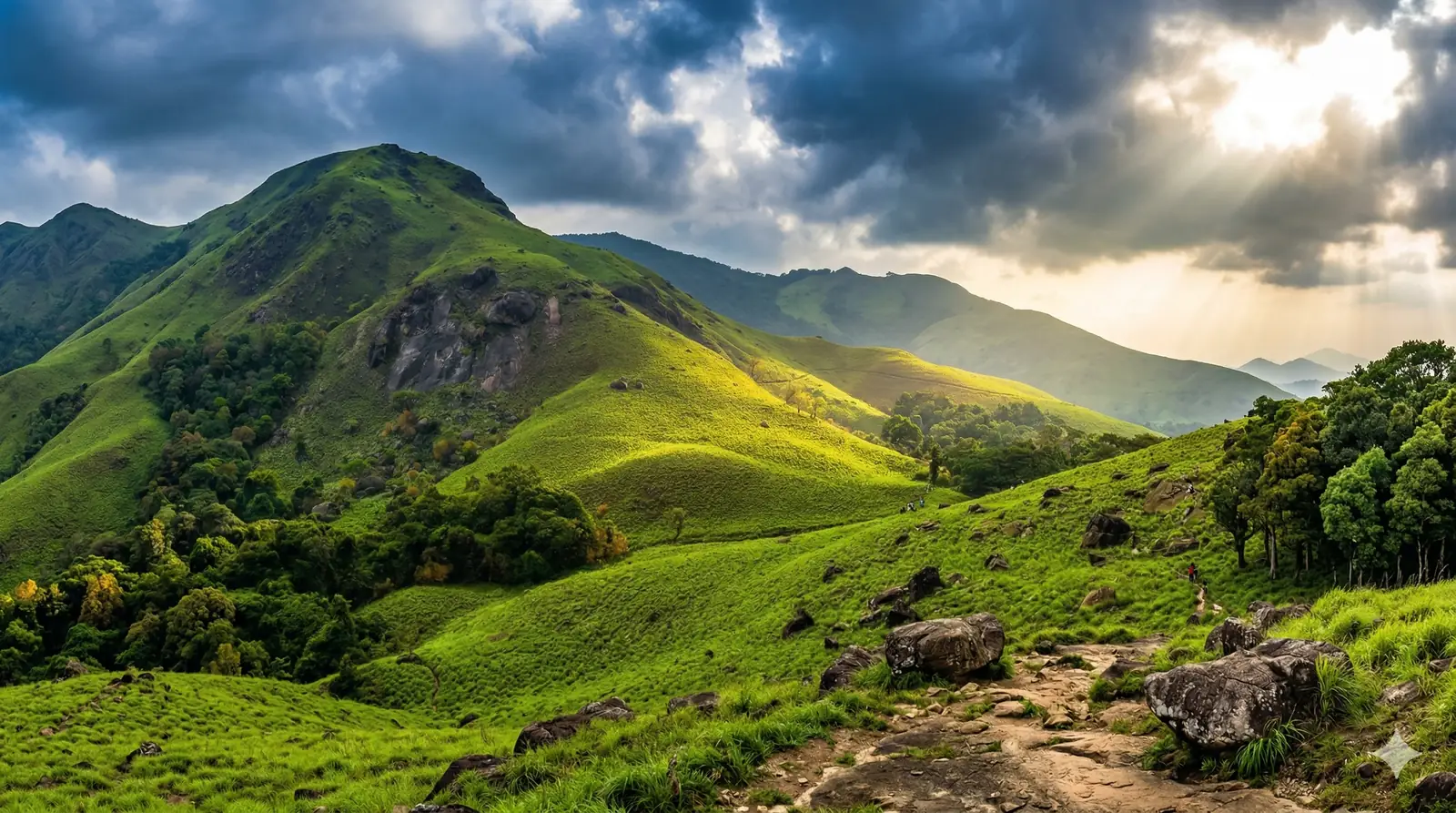
Most people who visit Wayanad look at the hills. A rare few look up after dark. Those who do — away from resort spotlights and town glow — find a sky that most urban residents have genuinely never seen before.
Why Wayanad Works for Stargazing
Wayanad sits at 700–2,100 metres above sea level, well away from major cities, with strict land-use rules near wildlife sanctuary buffers that limit light pollution growth. On a clear night from November through February, the Milky Way is visible as a distinct structural arc — not the faint smear that passes for stargazing near Indian cities, but the real three-dimensional structure of the galaxy's disc. Post-monsoon air (October–February) has low humidity and minimal particulate content, giving Wayanad its best atmospheric transparency of the year.
The Best Stargazing Spots
Aranamala Hills (Near Mananthavady)
Aranamala is among the darkest accessible locations in Wayanad. Surrounding forest buffers any residual light from settlements, and several homestay operators here specifically maintain zero outdoor lighting after 9 PM. Near-360-degree horizon visibility and consistently clear skies from November to February make this the top spot for Milky Way photography in the district.
💡 Camera Settings: ISO 3200–6400, f/2.0–f/2.8, 20–25 second exposure. Sturdy tripod essential — the hillside terrain is uneven.
Brahmagiri Range Viewpoints (Near Thirunelli)
Open plateau terrain at significant elevation with minimal nearby light sources. The northern horizon here is largely unobstructed — good for northern constellation viewing and meteor shower events. Night access requires a local guide.
Open-Terrace Farm Stays, Western Wayanad
Several working farms in the Padinharathara area have rooftop terraces or open paddy field access facing north, framed by areca palms on the horizon. These properties don't market themselves as stargazing destinations, but their deliberate absence of outdoor lighting makes them excellent informal observing sites for travellers who simply want to lie on a mat and look up.
What Makes a Genuine Digital Detox Stay
The 'digital detox' label is applied too liberally. A resort that removes the TV while providing full Wi-Fi in every room is not a detox property. Genuine offline accommodation has specific features: no in-room Wi-Fi or television, shared connectivity only in a designated area during limited hours, no outdoor artificial lighting after a set time, physically active daily routines, and food prepared from the farm. The actual product is the deceleration that happens when you are genuinely without your screen for 36+ hours. It is not comfortable for the first few hours. After that, it is extraordinary.
On decoupen.com, properties verified as meeting genuine digital detox criteria carry the Off-Grid Stay and No-Wi-Fi Room filter tags — confirmed directly with owners during onboarding, not self-reported by the property.
When to Go
November through February is the peak dark-sky season: dry atmosphere, low humidity, long clear nights. December and January have the longest usable observing windows. October delivers excellent conditions on clear nights after the northeast monsoon. March brings increasing haze. June through September: cloud cover makes stargazing largely impossible.
Pairing Stargazing With a Purposeful Stay
The most satisfying combination in Wayanad is a working farmstay with terrace access in the Aranamala or Padinharathara belt. Spend your days on the farm — harvesting pepper or cardamom, cooking with the family, walking forest edges — and your evenings horizontal, watching a sky that takes time to fully arrive in. This is the slowest, most restorative version of Wayanad travel. No itinerary required.
Browse verified off-grid and no-Wi-Fi stays in Wayanad on decoupen.com — dark skies included.