
Wayanad Wildlife Safari Guide: When to Go and How to See More
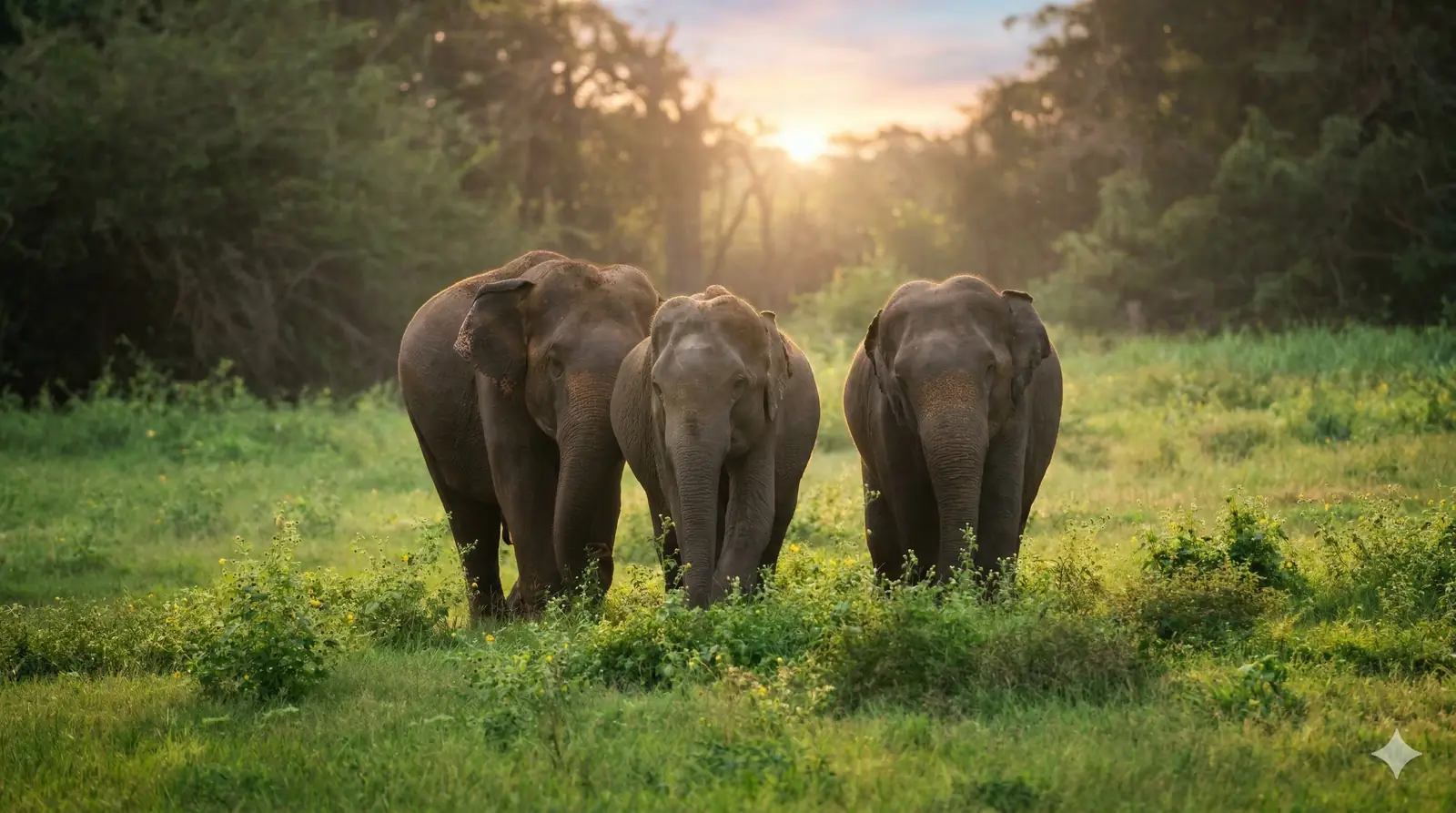
Most Wayanad safari visitors return having seen a spotted deer and a langur. A well-timed, prepared visitor returns having seen elephant herds, gaur, sloth bear, and occasionally leopard. The difference is almost entirely timing and knowledge — not luck.
Wayanad's Place in Asia's Largest Wildlife Corridor
Wayanad Wildlife Sanctuary (344 sq km) is not an isolated reserve. It connects directly with Nagarhole and Bandipur Tiger Reserves in Karnataka and Mudumalai Tiger Reserve in Tamil Nadu — forming a continuous forest corridor of over 5,500 sq km. Animals move freely across these boundaries. Elephants tracked at Tholpetty in November may have grazed in Mudumalai the previous month. Understanding this connectivity explains why sightings in Wayanad are genuine, not manufactured.
Muthanga vs Tholpetty: Which Safari to Choose
Muthanga Wildlife Sanctuary (near Sultan Bathery)
Wayanad's primary jeep safari point and most accessible option. Mixed terrain of dry deciduous forest, grassland patches, and seasonal water bodies reliably delivers elephant, Indian gaur, spotted deer, wild boar, and langur. Sloth bear appear near fruiting trees in the afternoon. Leopard sightings are infrequent but recorded. Morning safari: 6:00–9:00 AM. Afternoon: 3:30–5:30 PM.
Tholpetty Wildlife Sanctuary (near Mananthavady)
Preferred by experienced wildlife watchers. Semi-evergreen forest with a river corridor delivers consistently larger elephant herds (20–40 individuals regularly seen at the Kabani riverbank), richer birdlife, and a more intimate, less crowded experience. Occasional tiger movement recorded along the river corridor. Morning opening: 5:30 AM — this is the most productive slot in all of Wayanad's wildlife calendar.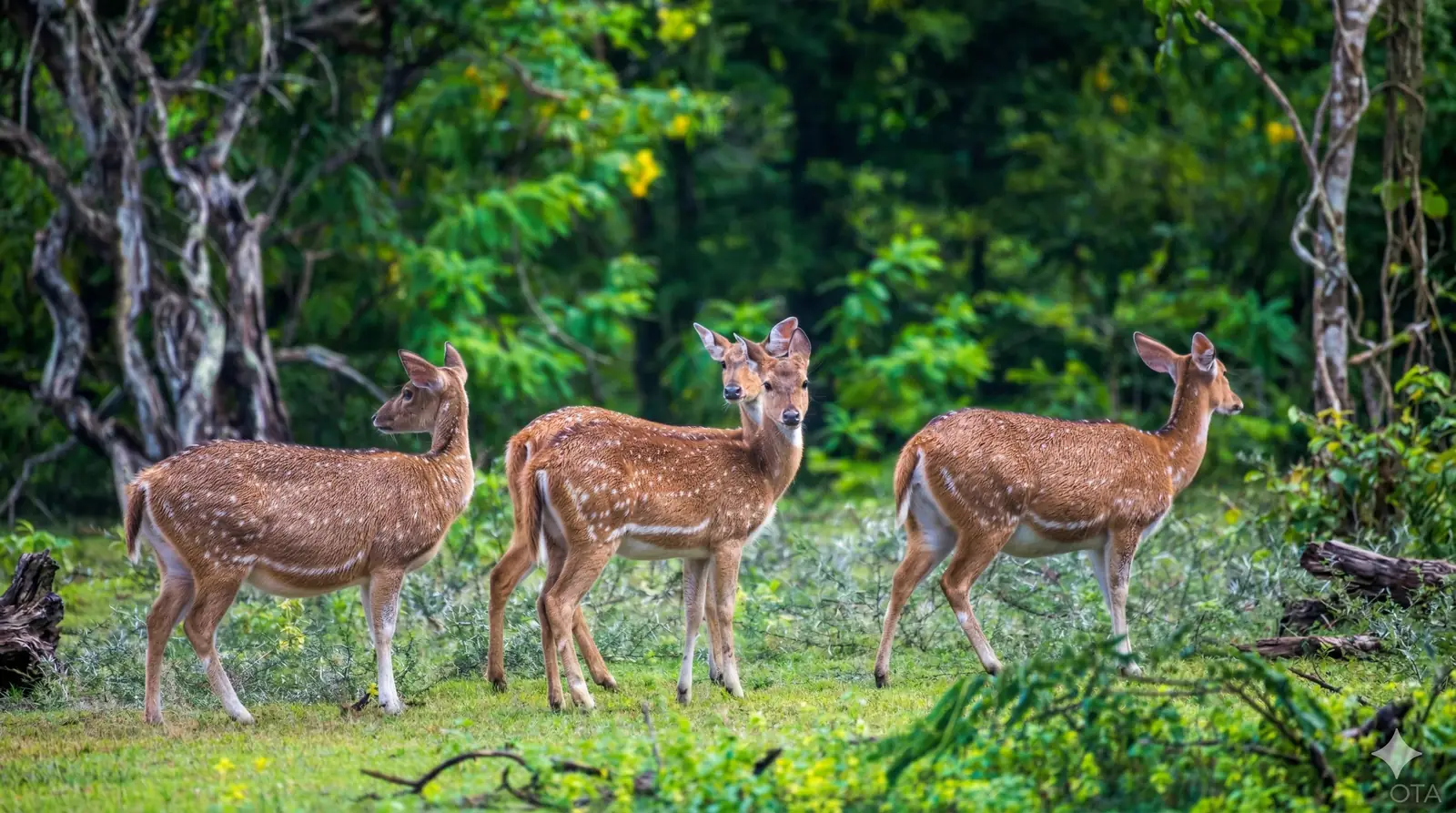
Hour-by-Hour Activity Guide (October–May Season)
5:30 AM — First Light at Tholpetty
The single most productive wildlife window. Animals returning to water and shade before heat builds. Elephant herds at or near the first water body within 2 km of the gate. Indian gaur grazing open clearings. Dholes occasionally audible after a night hunt. Temperature is lowest and wildlife density along accessible tracks is highest.
6:00–7:30 AM — Golden Hour
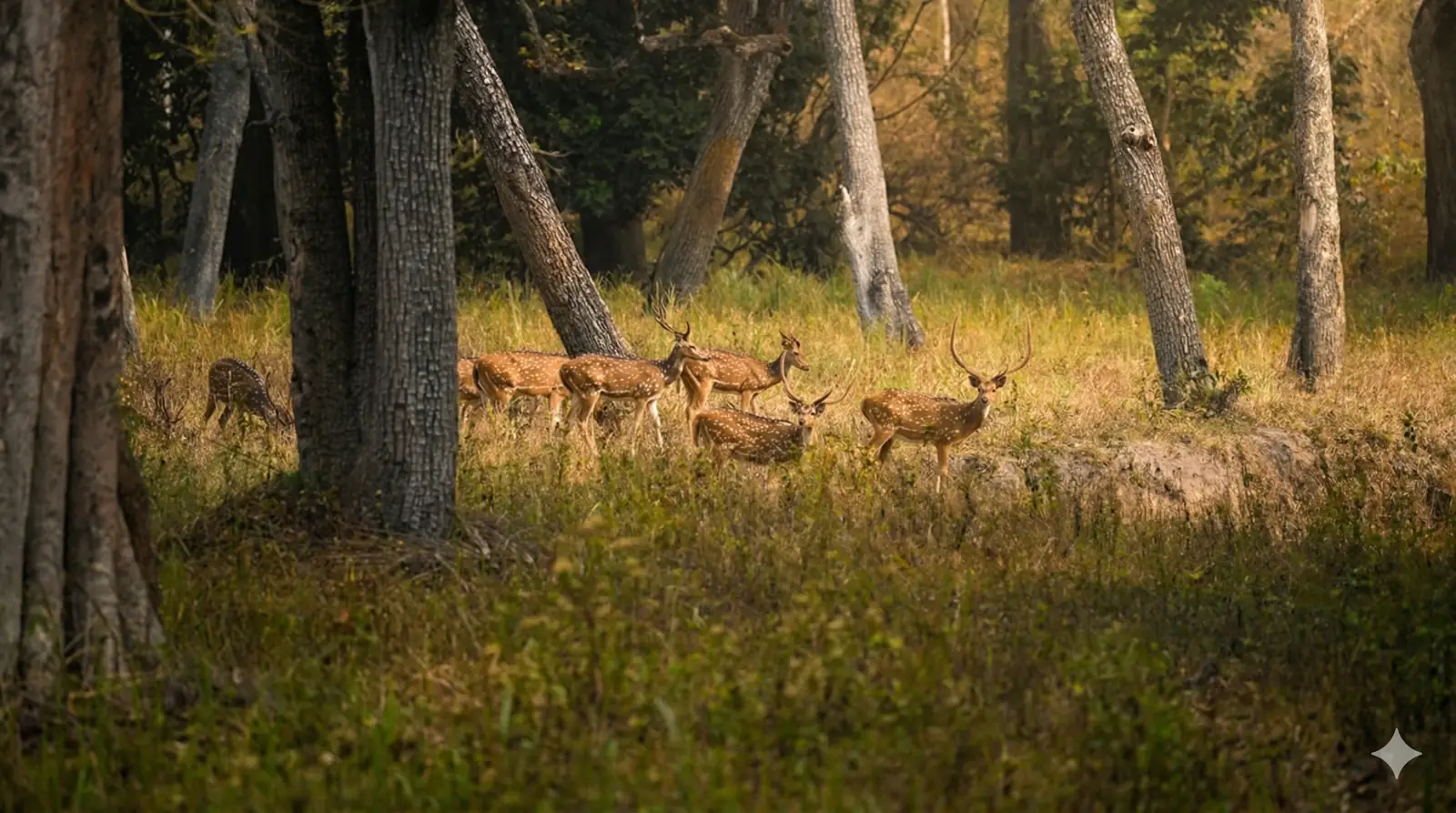
Peak photography window. Spotted deer on open grassland. Malabar giant squirrels active in the mid-canopy. Malabar hornbill, Malabar whistling thrush, and serpent eagle all visible and calling. If a leopard is going to be seen, it is almost always now — following the deer herds at forest edges.
 3:30–5:30 PM — Afternoon Safari (Muthanga)
Best window for elephant concentration at Muthanga's salt lick and internal water points. In dry season (January–April), herds of 30–50 individuals gather predictably as outside water sources diminish. Sloth bear most frequently sighted at fruiting fig trees in the last hour of light.
After Sundown — From Your Stay
Accommodation near the sanctuary boundary delivers wildlife encounter without a vehicle. Elephant trumpet, deer alarm calls, and barking deer at night are routine sounds at forest-edge properties. This is not a consolation prize — it is its own category of experience.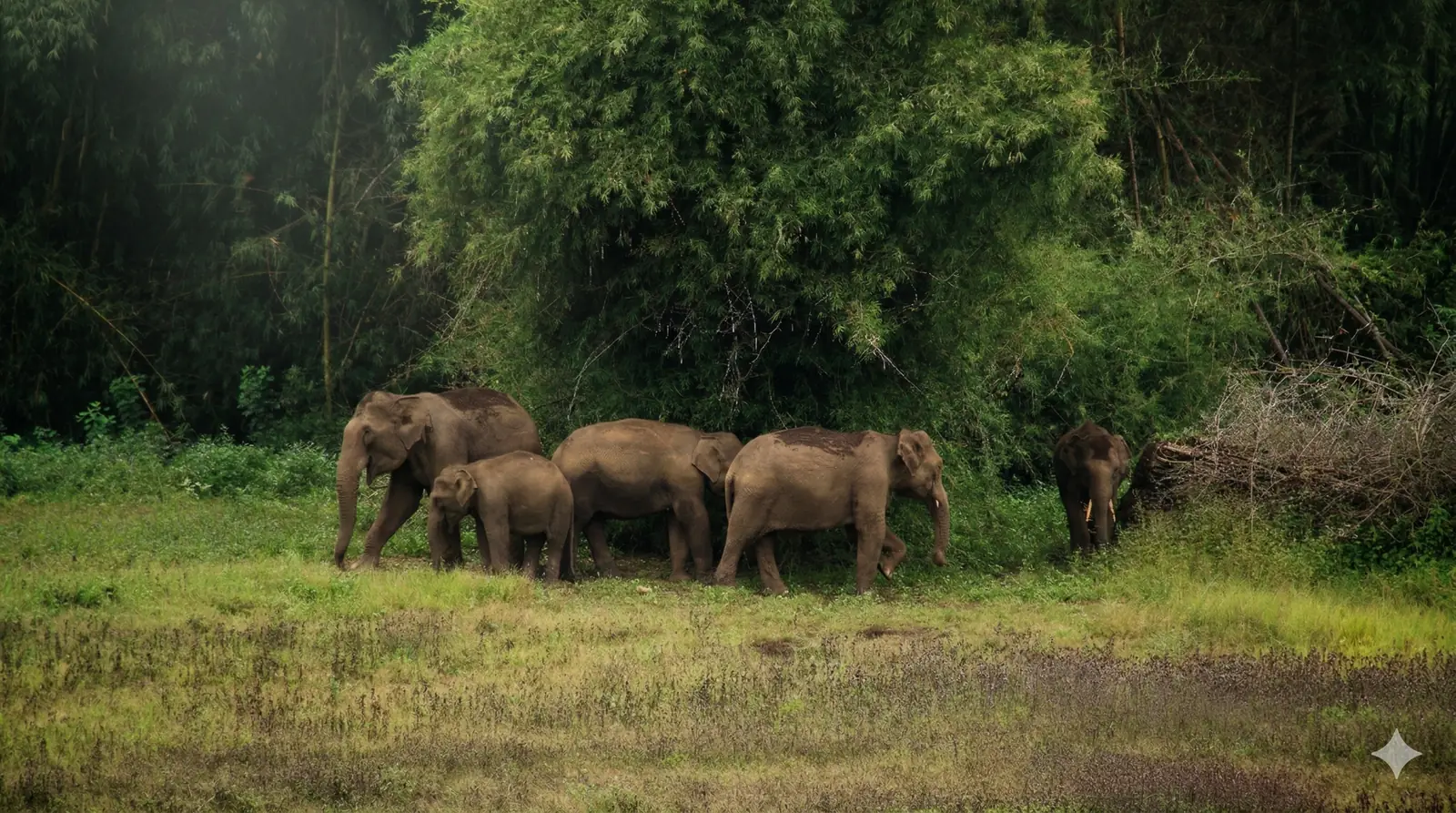
Essential Preparation
- Book 10–14 days ahead in peak season (December–March) — slots fill quickly at both sanctuaries.
- Clothing: Olive, khaki, grey. Avoid white and bright colours — visible to wildlife at long range.
- Carry 8x42 or 10x42 binoculars — most encounters begin at 150–400 metres.
- Disable camera flash — it triggers stress responses in elephants, especially with calves present.
- Maintain complete silence in the vehicle — sound serves as the prey animal early warning system.
- Use your guide actively — they track recent animal locations between sessions.
Best Wildlife Season
February through May: Peak season. Forest thins slightly, water concentrates wildlife, daily movement becomes predictable. October–November: Excellent birding, but denser post-monsoon vegetation reduces sighting distances. December–January: Richest bird diversity; highest tourist numbers on safari tracks.
Stay near the sanctuary boundary and hear the forest at night. Browse wildlife-adjacent properties at decoupen.com.